
Pontoon Canvas & Trailering Guide
Pontoon Boat Cover: Size and Trailering Attachment
Updated
When measuring for a pontoon boat cover, Center-Line Length is the straight-line length from the tip of the bow to the very back of the transom.
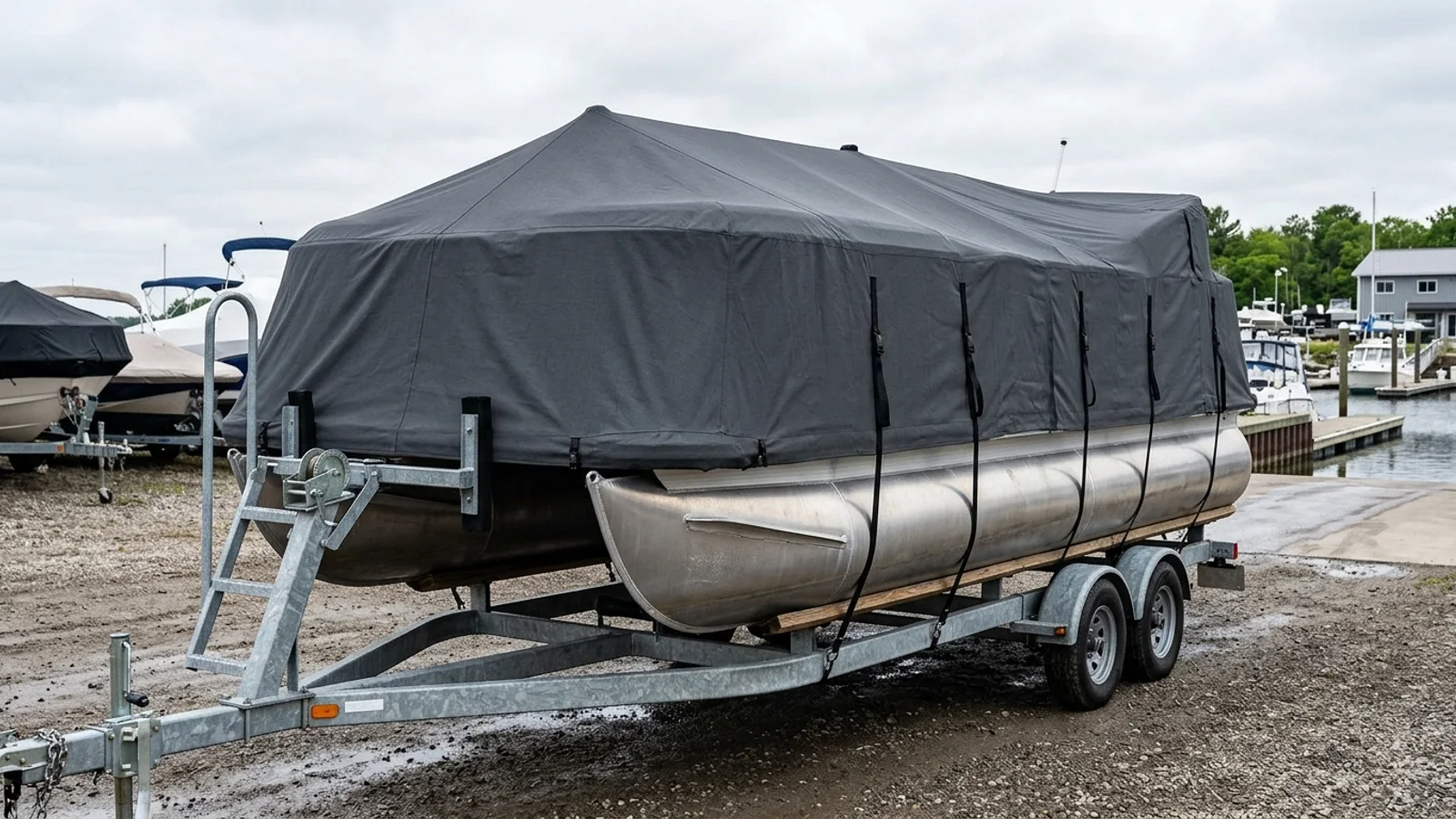
Playpen Covers vs. Full Trailerable Pontoon Covers
Marine Fabricator Magazine distinguishes mooring covers that protect a stationary boat at its mooring from travel covers that provide protection when the boat is traveling down the highway on a trailer. While mooring covers may be weighted down rather than fastened around the perimeter, travel covers are generally more tightly fitted to reduce wind resistance. Cockpit partial covers generally snap to the boat all around the cockpit to provide sun and rain protection for upholstery, instruments, and items stored in the cockpit. By contrast, multi-piece full covers pass over the top of the entire boat and extend beyond the rubrail along the sides, and are typically made in a couple of pieces that are not recommended for trailering. The best partial covers designed for highway trailering will withstand hurricane force winds of 74 mph and over, which are easily reached on the highway.
As explained across our boat buying and ownership guides, in the Cove pontoon range, 16, 22 and 24 are model labels whose published reference lengths are 5 m, 6.8 m and 7.2 m. Cove 16 carries a reference Model length of 5 m and a beam of 2.3 m. Cove 22 carries a reference Model length of 6.8 m with beam choices of 2.3 / 2.6 m. Cove 24 extends reference Model length to 7.2 m with beam choices of 2.3 / 2.6 m. The outside width difference between a 2.6 m and 2.3 m beam is 0.30 m (2.6 − 2.3 = 0.30 m, or 300 mm).
Taylor Made states that trailering with a cover installed requires a semi-custom or factory replacement boat cover designed for trailering, and that universal covers are not recommended for trailering. If a boat came with a factory-installed cover, owners can check the Ameritex or Taylor Made tag sewn into the original canvas for the part number (P/N) and manufacturing date (DT). Outer Armor (Commercial Sewing) also produces model-specific mooring covers incorporating a patented Vacu-Hold System that eliminates the need for tie-down straps during water storage or transportation.
| Cover Classification | Hull & Rail Coverage | Fastening & Fit | Trailering Suitability |
|---|---|---|---|
| Cockpit partial covers | Around the cockpit | Snap to the boat all around | Sun and rain protection |
| Mooring covers | Stationary boat at its mooring | Weighted down or perimeter fit | Stationary mooring protection |
| Multi-piece full covers | Beyond the rubrail along the sides | Made in a couple of pieces | Not recommended for trailering |
| Travel covers | protection when the boat is traveling down the highway on a trailer | Tightly fitted to reduce wind | Highway travel on a trailer |
| Vacu-Hold mooring covers | Model-specific cover | Patented strapless system | On the water or transportation |
Use a semi-custom or factory replacement boat cover designed for trailering when towing on the highway, as universal covers are not recommended for trailering.
How to Measure Deck Length, Beam Width, and Fence Layout
As emphasized in our pontoon floor plan and beam comparison, buyers must confirm deck length, overall dimensions, and final arrangement in the written configuration rather than converting a model name into a measured length. In a pontoon cover measurement, Taylor Made defines Center-Line Length as the total length of the boat from the tip of the bow to the very back of the transom, measured in a straight line. Do not include outboard motors, swim platforms, bow pulpits, or random fishing gear hanging off the edge when recording Center-Line Length. Beam Width is measured across the widest part of the boat hull, usually somewhere around midship. Carver pontoon covers accommodate large 4-bow bimini tops when folded and stored, provided the top is stored without the use of the trailering strut.
For pontoons with a bimini top and rails that fully enclose the deck, Carver Styled-to-Fit series FED-18 through FED-24 cover deck lengths from 18’6″ to 24’6″ across a 102″ deck width. For pontoons with a bimini top and rails that partially enclose the deck leaving 1′-3′ of open deck forward of the front gate, Carver Styled-to-Fit series PED-18 through PED-24 fit deck lengths from 18’6″ to 24’6″ at a 102″ deck width. For pontoons with low rails or fishing chairs at the fore and aft end of the deck, Carver FC-series covers accommodate fishing chairs and rails up to 20″. For pontoons with rails that partially enclose the deck leaving 1′-3′ of open deck both forward of the front gate and aft of the rear gate, Carver specialty covers are designed for storage only.
| Pontoon Fence Layout | Open Deck / Rail Allowance | Deck Length & Beam Range | Carver Series & Use |
|---|---|---|---|
| rails that fully enclose the deck | — | 18’6″ to 24’6″ across a 102″ deck width | Styled-to-Fit series FED-18 through FED-24 |
| rails that partially enclose the deck | leaving 1′-3′ of open deck forward of the front gate | 18’6″ to 24’6″ at a 102″ deck width | Styled-to-Fit series PED-18 through PED-24 |
| low rails or fishing chairs at the fore and aft end | accommodate fishing chairs and rails up to 20″ | — | Carver FC-series covers |
| leaving 1′-3′ of open deck both forward | forward of the front gate and aft of the rear gate | — | designed for storage only |
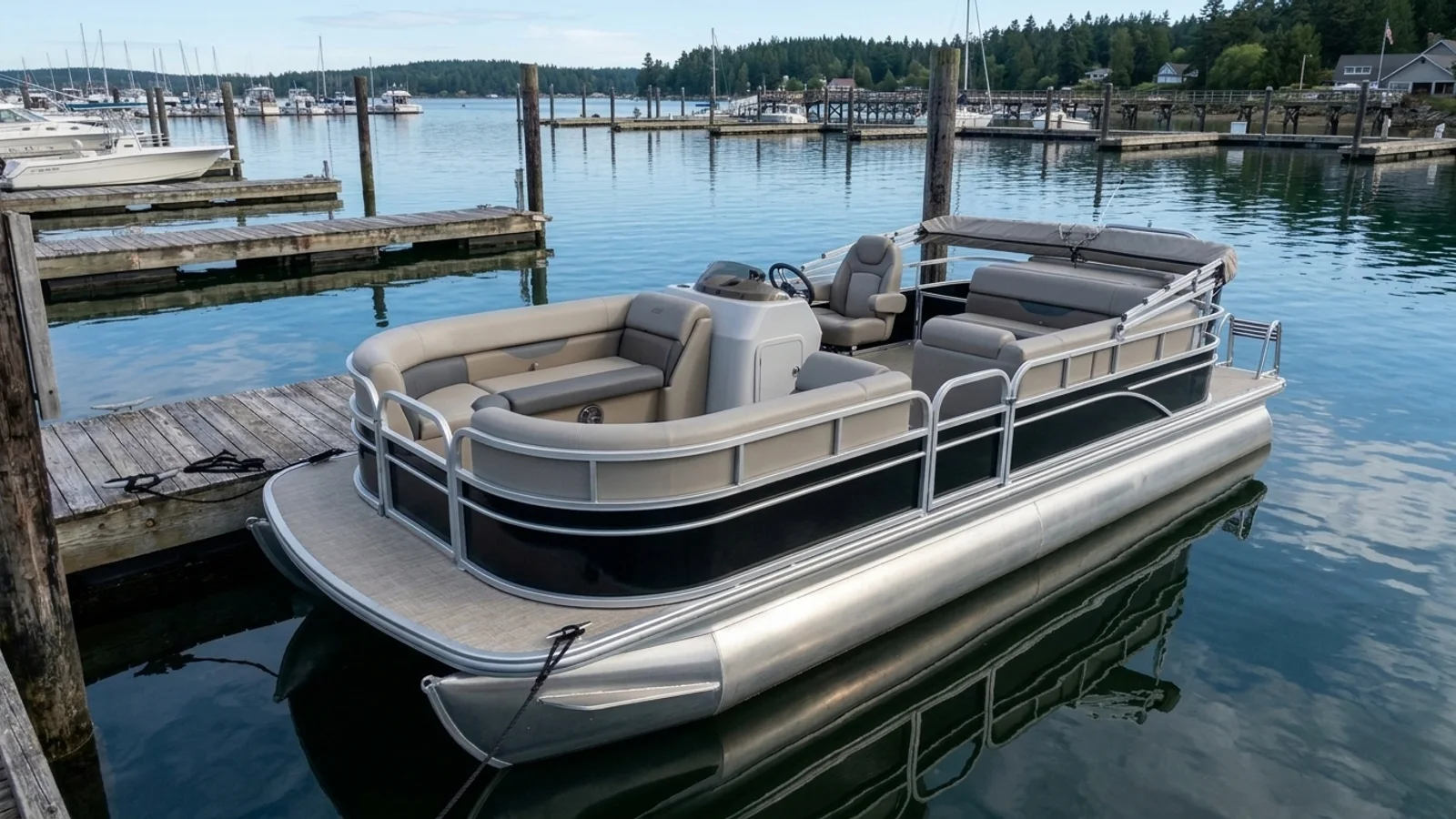
Confirm deck length, overall dimensions, and final arrangement in the written configuration rather than converting a model name into a measured length.
Marine Cover Fabrics, Seams, and Stationary Support Hardware
For everyday boating and moderate conditions, Taylor Made HotShot fabric uses a 400 Denier 100% solution-dyed polyester with a urethane-coated finish weighing 6.25 oz. For long-term storage and humid environments, Taylor Made Ultima fabric steps up to a 600 Denier 100% solution-dyed polyester with a urethane-coated finish weighing 7.5 oz. Carver Sun-DURA pontoon cover fabric is a 100% Solution-Dyed marine grade polyester weighing 7.6 oz. at 600 x 600 Denier with a 100% Polyurethane finish coating. Carver pontoon cover join seams are folded four-ply with double stitch construction, tie-down loops sewn into the hem, and a ¼” strong and durable shock cord in the hem.
Since pontoon boats do not have tall architectural features, it is necessary to build a high center under the cover to provide for water runoff. Carver recommends using a minimum of (3) #60002 Vented Support Poles or (2) #60008 Y-Strap Support Systems (sold separately) to properly support a pontoon boat cover. Each #60008 Y-Strap Support System includes one adjustable 22″ to 70″ anodized aluminum support pole, system center, and strap set; #60002 is a vented support pole. Both are designed for storage only. For in-water mooring, Carver Pontoon Mooring Kit #61015 includes (3) Vented Support Poles and (2) Sand Bag Mooring Kits of 4 bags per kit.
| Fabric Line | Denier & Fiber Construction | Weight & Finish | Primary Application |
|---|---|---|---|
| Taylor Made HotShot fabric | 400 Denier 100% solution-dyed polyester | urethane-coated finish weighing 6.25 oz. | everyday boating and moderate conditions |
| Taylor Made Ultima fabric | 600 Denier 100% solution-dyed polyester | urethane-coated finish weighing 7.5 oz. | long-term storage and humid environments |
| Carver Sun-DURA pontoon cover fabric | 100% Solution-Dyed marine grade polyester | 7.6 oz. at 600 x 600 Denier | 100% Polyurethane finish coating |
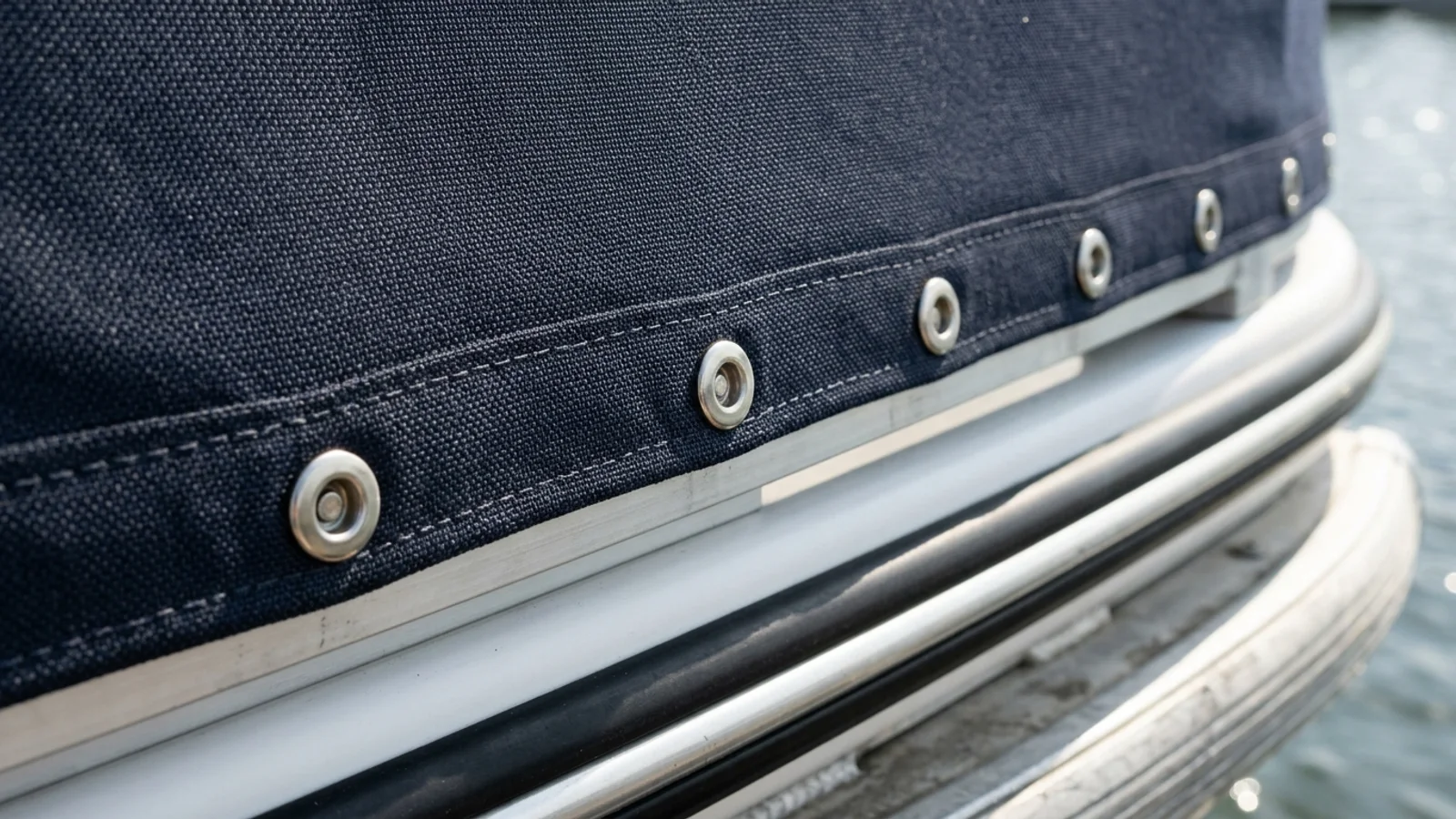
Carver adjustable 22″ to 70″ anodized aluminum support poles and Y-strap systems are designed for storage only.
Trailering Attachment, Straps, and Highway Preparation
Before installing a trailering pontoon boat cover, take the precaution of padding the windshield, trolling motors, depth finders, etc. to avoid accidental tearing. Veranda Marine also advises owners to fold up and tuck away the Bimini top and make sure the purchased cover is made to hold up under highway speeds. Carver Boat Cover Tie-Down Kit (Order No. 61000) supplies twelve 12-foot straps constructed of heavy-duty 1″ black polypropylene webbing and quick-release buckles that do not stretch like bungee cords. When trailering, use heavy-duty tie-down straps, avoid bungee cords that can stretch, and if the cover is over 20′ in length Carver recommends two tie-down kits. As covered in our boat trailer selection checklist, a pontoon bunk trailer supports the boat on lengthwise bunks beneath the tubes for frequent road travel, whereas a pontoon scissor or center-lift trailer uses a narrow lifting frame between the tubes, so owners should request a pontoon configuration review and explore our boat buying and ownership guides before road transport.
- Thread the buckle-end of each strap through the hem tie-down loop, pull through approximately 12 inches, and tie off with a simple overhand knot before guiding the opposite end of the strap around the trailer.
- Install all the straps on the cover before tightening, tighten all straps securely so that the cover is taut, leave approximately 12” of webbing for adjustment, and check straps for tautness after first use.
- ShoreLand'r instructs tying the bow eye both downward and forward and securing a transom tie-down strap or gunwale tie-down to the trailer light brackets or side frame brackets.
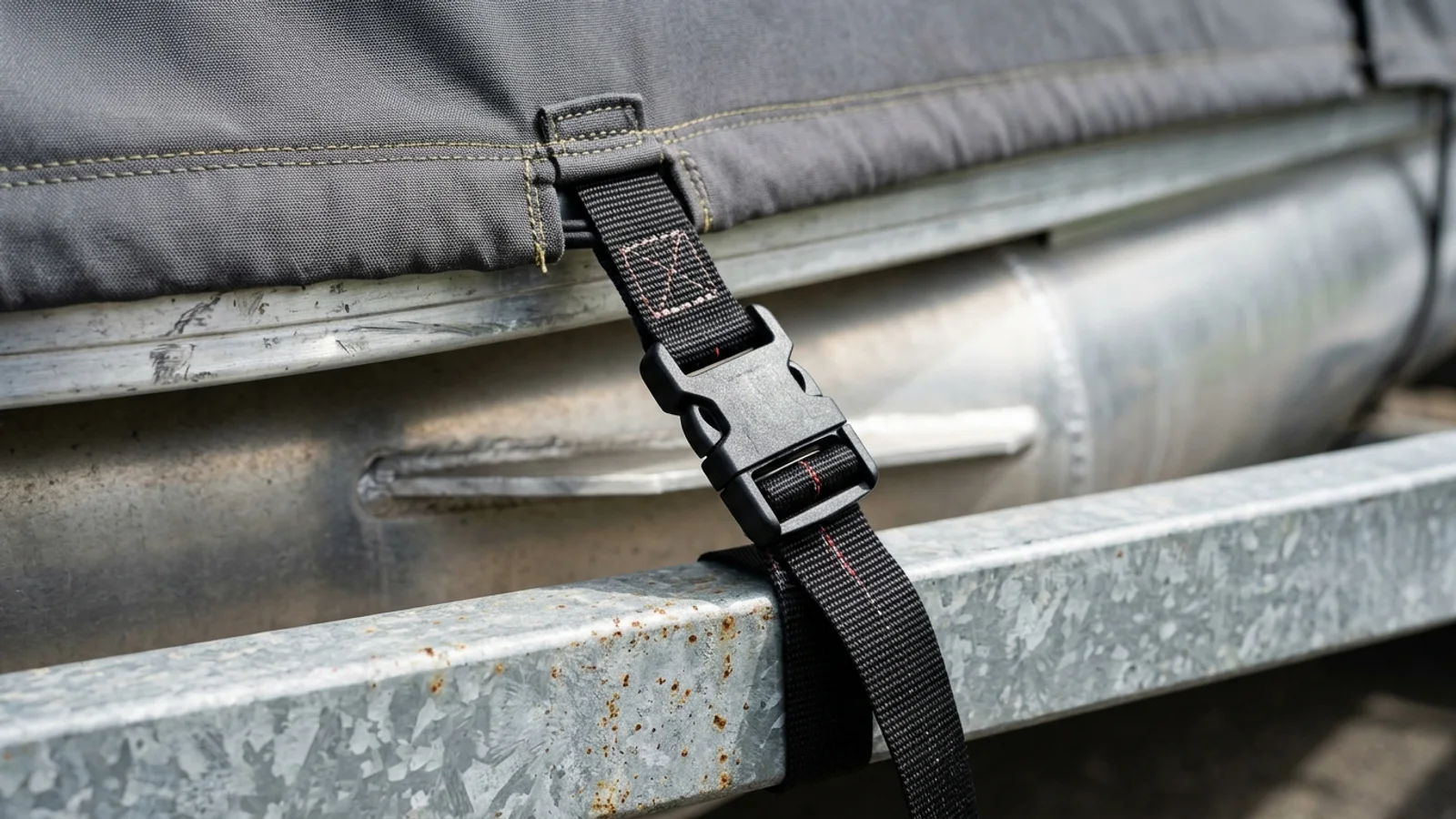
Install all straps on the cover before tightening, cinch every strap until the cover is taut, leave approximately 12” of webbing, and check straps for tautness after first use.
Sources
Manufacturer catalogs, installation manuals, industry fabricator classifications, and reference guides cited in this article.
- SEAVIA Boats — Pontoon Floor Plan, Beam, and Trailer Selection Guides
- Marine Fabricator Magazine — Identifying Boat Covers
- Taylor Made Products — How to Choose the Right Boat Cover
- Carver by Covercraft — Pontoon Boat Covers and Support Pole Systems
- Carver by Covercraft — Boat Cover Tie-Down Kit and Care Instructions
- Commercial Sewing — Outer Armor Marine Mooring Covers
- Veranda Marine — Pontoon Highway Travel Preparation Guide
- ShoreLand'r — Boat Trailer Owner Guide