
Weight capacity checklist
Pontoon weight capacity: rating checklist
Updated
Counting seats alone can leave you with the wrong pontoon for your planned outing. Check pontoon weight capacity against the rating and loading instructions for the exact configuration. Use the checklist below to record the documents, people and carried load before you choose a boat.
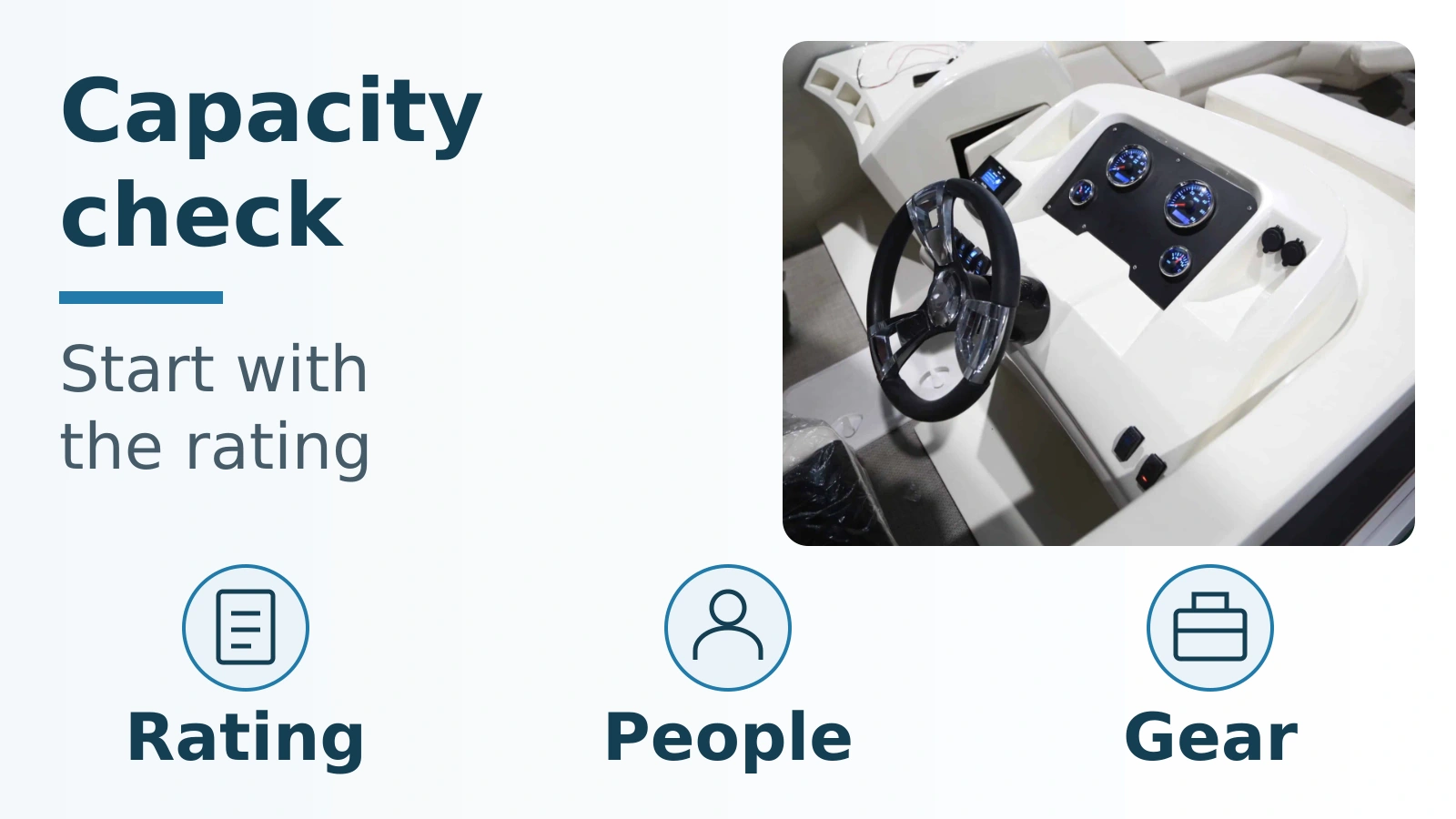
Check persons and weight separately
A passenger count and a weight limit answer different questions. Check each applicable limit on the boat’s own rating document; staying below one does not give permission to exceed another. SEAVIA’s pontoon range uses reference passenger figures to help compare layouts. Request the final capacity information for your selected configuration before treating a reference figure as a loading limit.
| Record | Use it for | Failure to prevent |
|---|---|---|
| Reference passenger figure | Shortlisting a deck layout | Mistaking brochure seating for permission to carry that crew. Obtain the actual rating. |
| Rated persons count | Checking how many people may be aboard under the stated conditions | Adding people because their combined weight seems low. Check the count independently. |
| Rated weight and label | Checking the load covered by that particular rating | Treating persons weight and total load as interchangeable. Copy each label and its inclusions. |
Copy the rating document for this configuration
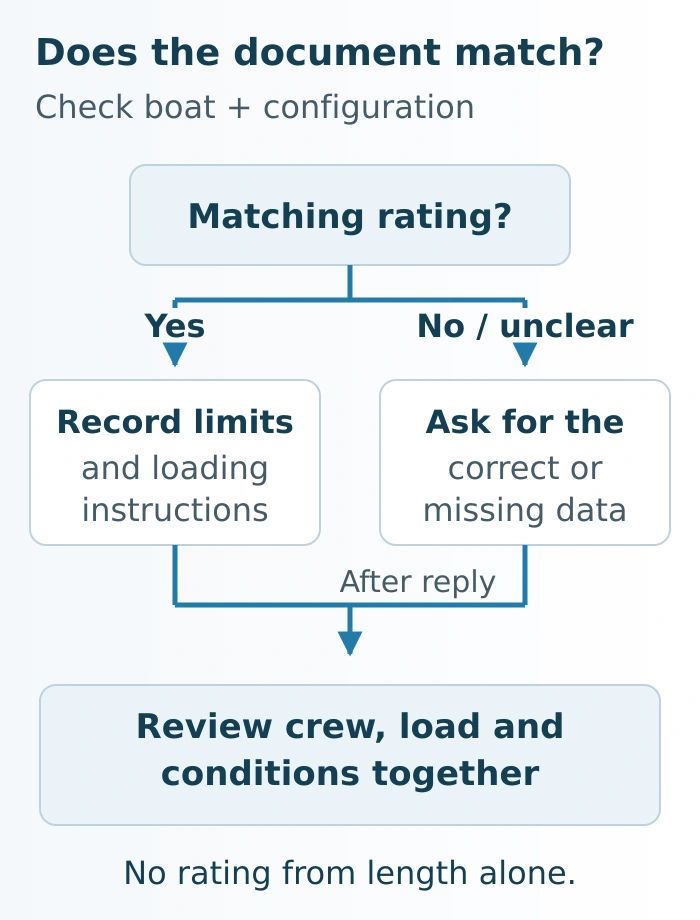
Keep a readable plate photo and the matching manual or manufacturer-issued rating sheet with the quotation. Check the boat identity and configuration together. If a document covers several versions, ask the manufacturer to identify which rating applies to the one offered.
| Checklist field | What to record |
|---|---|
| Document and boat identity | Issuer, document date or revision, model/year and hull identifier where available. Keep a full photo or file. |
| Configuration | Engine, tube arrangement and fitted options; note any difference from the quotation. |
| Persons count | Copy the count and any qualification exactly. Mark a missing field “not supplied.” |
| Weight rating(s) | Copy each number, unit and full label, including any separate persons-weight or total-load field. |
| Included loads | Record how the document treats people, engine, batteries, fuel, water and gear. Ask about anything it leaves unclear. |
| Power and conditions | Keep any maximum-power field separate from weight. Copy the loading, seating, distribution and operating-condition instructions. |
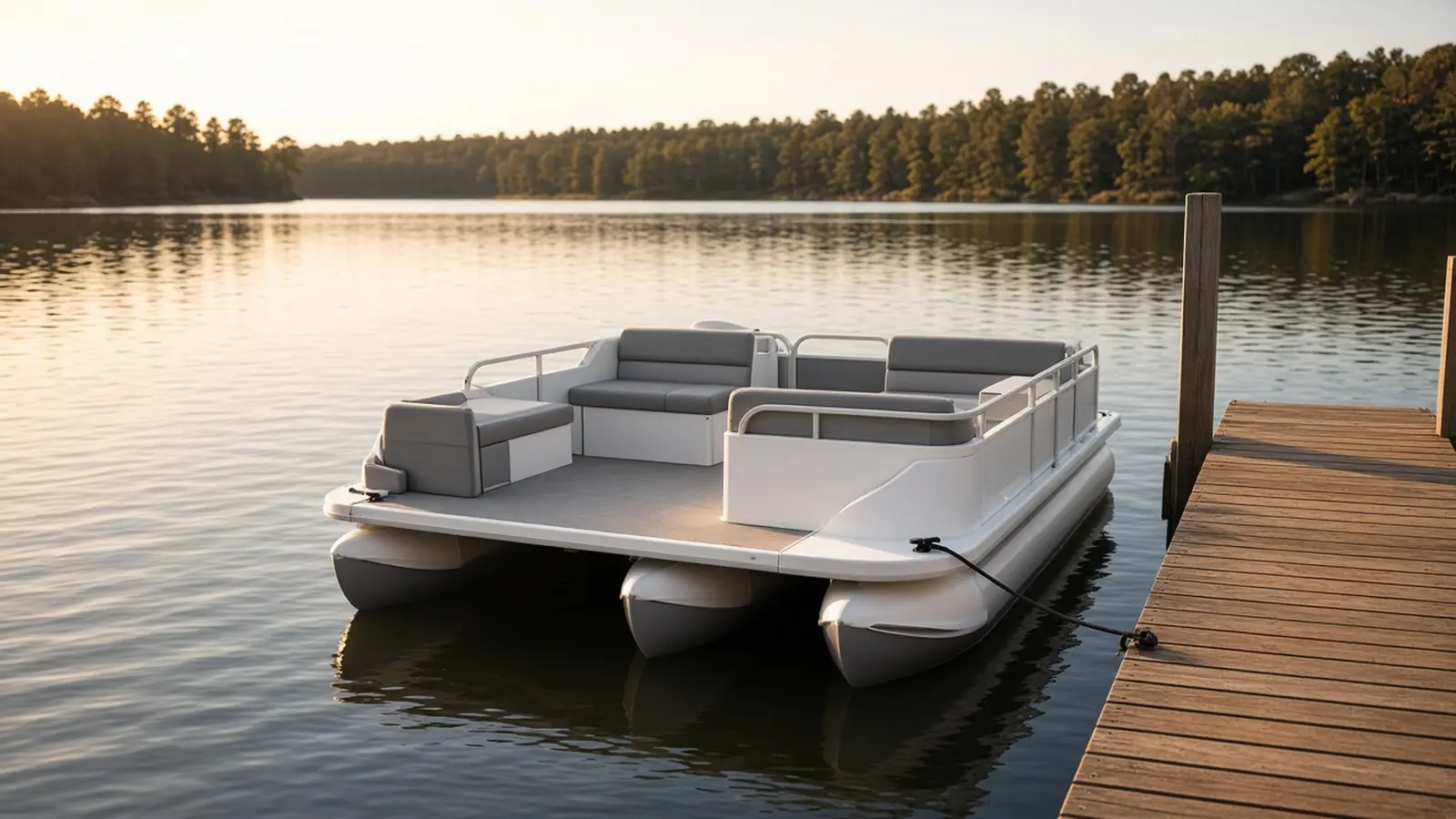
Build an inventory for your ordinary outing
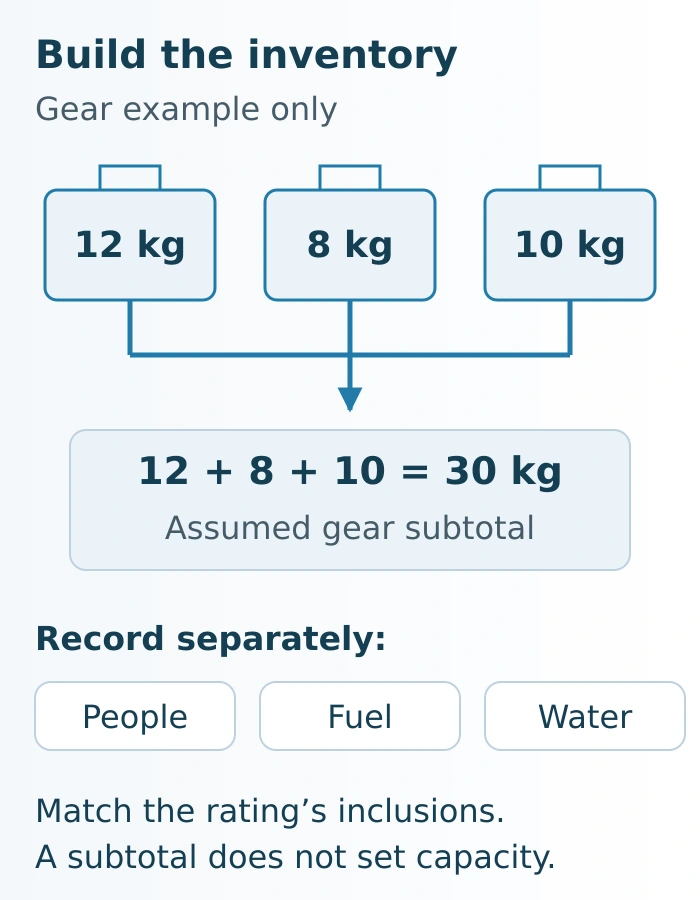
List everyone and everything you expect aboard, using one unit throughout. Record measured weights or a documented weight for the exact item and amount. Keep unknown entries visible. A subtotal can help you organize the list, but you can compare it with a rating only when the document defines the same load.
Inventory subtotal = sum of the recorded item weights. For an arithmetic example only, assume three gear items weigh 12 kg, 8 kg and 10 kg: 12 + 8 + 10 = 30 kg of gear. These assumed inputs are not a boat rating or a suggested load. They exclude people, fuel, water and other equipment. An unknown entry leaves the inventory incomplete.
| Inventory line | What to enter | Check before adding |
|---|---|---|
| Each person | Name or role and actual weight | Keep the headcount as a separate check; do not use an assumed average person. |
| Fuel | Planned fill and its documented weight, if available | Ask how fuel is included in the applicable rating. Do not substitute tank volume for mass. |
| Fresh water | Tank fill and carried containers | Include the planned amount; identify unknown weights. |
| Gear and supplies | Cooler with contents, anchor, bags and other carried items | Record loaded items once. An empty cooler weight omits its contents. |
| Fitted equipment | Engine, batteries and selected options | Ask which items are already accounted for, so you neither omit nor count them twice. |
Resolve missing ratings before using a limit
If the rating is missing, unreadable or for a different configuration, send the document and the discrepancy to the manufacturer. Ask for the applicable persons count, weight labels and inclusion rules in writing. Do not replace a missing value with a length chart, a buoyancy calculation or another boat’s plate.
Check the manufacturer’s loading instructions as well as the numbers. The owner-manual guidance linked below treats ratings as condition-dependent and warns that overloading can reduce freeboard and increase swamping risk. Usable seating, load distribution and adverse conditions can require a smaller outing. Being within a published maximum alone does not establish that a trip is suitable.
A 20 ft or 24 ft chart cannot choose the boat for you
A search for “20 ft pontoon boat capacity” or “24 ft pontoon boat capacity” still needs a rating for the actual boat. Length does not identify the engine, tube arrangement, fitted equipment or rating definitions. Compare documented configurations against the crew and gear you actually plan to bring; the pontoon buying guide helps you shortlist layouts. Use the pontoon and tritoon guide for tube-package questions and how buying works to prepare for a written offer.
Boat weight and carrying capacity also belong in different records. Dry, fueled and boat-plus-trailer weights describe versions of the boat or transport package. They do not supply a missing onboard load rating.
Before paying for options, ask whether the selected configuration suits your planned outing. A different engine, tube arrangement or equipment package may change the quotation and the documents you need. Use the pontoon and tritoon guide to compare configuration questions and how buying works to review the written offer. Confirm engine, rigging, trailer, delivery and support scope together; no cost saving or capacity increase follows from the name of a package.
What to send us for a configuration check
Open a WhatsApp draft with your preferred pontoon model and destination, then add the document checklist and outing inventory. Ask which written ratings and loading instructions apply to the configuration in the quotation. You send the message in WhatsApp; opening the draft does not mean SEAVIA has received it or confirmed capacity, availability or an order.
| Item | Why we need it | Example format |
|---|---|---|
| Model and destination | Identify the configuration and intended market | Model name; country and region; intended water/use |
| Documents and discrepancies | Identify the rating you are asking about | Full plate photo/manual page; “weight label unreadable” |
| Usual crew and carried load | Compare your plans with the applicable written information | Headcount; itemized weights with units; unknowns marked |
| Equipment preferences | Keep the quote and capacity check tied to the same version | Engine/tube/options list; changes since the document was issued |
Send the rating document and outing inventory together so the configuration question can be answered in writing.
Method and sources
Updated October 2026. This checklist separates the manufacturer’s rating from a buyer’s inventory. SEAVIA’s reference catalog and quotation process establish what to request; selected-configuration load figures remain on request. The external owner manuals support the loading precautions, not a SEAVIA rating, certification or legal conclusion. The gear subtotal is explicitly assumed arithmetic, and the diagrams show document checks rather than a flotation calculation. Return to buying guides for the related selection steps.